


In Europe, stone structures built by ancient civilizations have long been a source of intrigue. From Breton dolmens to Scottish stone circles, here is a selection of the most breathtaking megalithic sites to explore on this continent.
England's most famous prehistoric monument, Stonehenge, a Neolithic wonder.
The ancient site was constructed between 3000 and 2000 BC, its significance remains unclear: its alignment with summer and winter solstices implies an astronomical purpose, while its design might have been utilized for religious ceremonies. The monument still holds a high level of esteem to this day!
Carnac, Brittany's megalithic treasure
Some of the world's largest monument sites exist in the rural southern region of the Morbihan area in France: approximately 3,000 standing stones stretch nearly 4 kilometres across the landscape! Archaeologists continue to be mystified by the arrangement of these structures, with some proposing that they functioned as a cosmic observatory and others suggesting a massive place of worship. Believed to have been created around 4,500 BC, these megaliths demonstrate the economic and cultural ascendancy of Neolithic societies in Western Europe. Adjacent to these standing stones, several ancient stone vaults and burial mounds add to the distinctiveness of this intriguing complex.
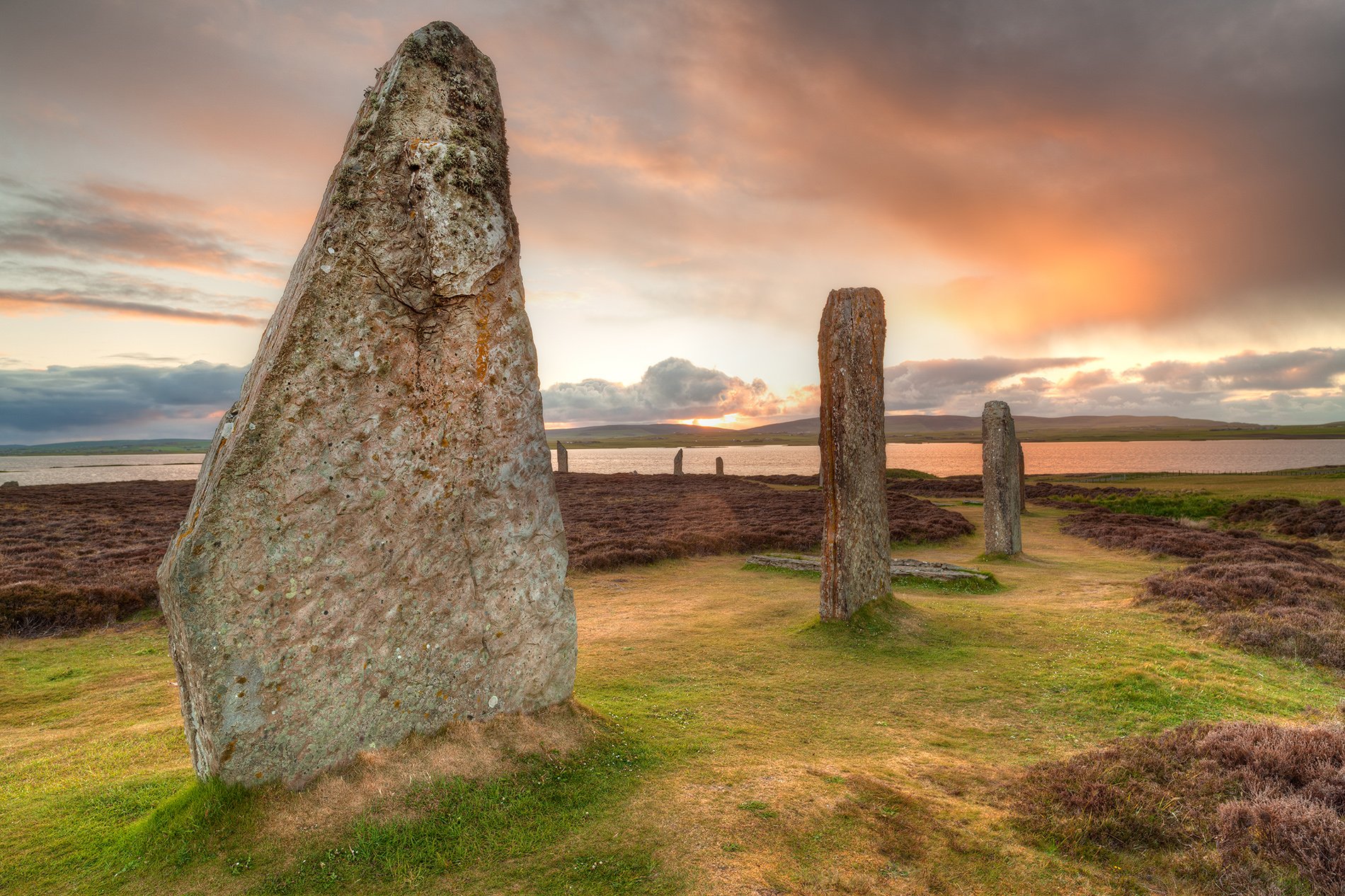
In the northwest corner of the British Isles, a smaller cluster of islands awaits discovery. The Orkney archipelago offers an immense collection of historical treasures.ково
The Orkney group of islands in northern Europe is home to one of the region's largest collections of prehistoric monuments, including the Ring of Brodgar, a circle of 36 standing stones dominating a rugged landscape of lakes and hills. A short distance from the Ring of Brodgar, the Stones of Stenness, dating back 3,100 years, stand proudly towards the horizon. Meanwhile, the ancient village of Skara Brae, featuring eight preserved homes, provides a unique glimpse into life during that period.
Hagar Qim Megalithic Temple, one of Malta's most impressive prehistoric temples.
Hagar Qim, located on Malta's island, is considered one of the world's oldest established religious settlements. Designated as a UNESCO World Heritage Site, megalithic Hagar Qim structures, built roughly 3,600 BC, are constructed from immense limestone blocks, some weighing in excess of 20 tonnes. Prominently notable is the temples' intricately carved details, as well as their alignment with the solstices, and its positioning, which provides a breathtaking vista of the Mediterranean Sea and the rocky outcrop of Filfla.
Newgrange, Ireland's prehistoric gem
Fifty kilometers outside Dublin, the Newgrange megalithic site, estimated to have been constructed as early as 3,200 B.C., is one of the oldest and most ancient monuments in Europe. What makes this massive tomb so unique is its remarkable Winter Solstice alignment: each year on December 21st, at sunrise, the sun's rays enter the tomb through a narrow passage, illuminating the internal chamber for a brief period. This remarkable architectural achievement, coupled with sophisticated astronomical knowledge, attests to the significant role that Sun worship played in the lives of the ancient Irish inhabitants.
The Antequera Dolmens Site, An Andalusia Heritage Site and a grand and stunning natural scenery
In Andalusia, at Antequera, the dolmens of Menga and Viera showcase the declined Neolithic era. Dating back 5,000 years, these huge communal tombs are among the best-conserved ones in the country. The Menga dolmen, with its roof supported by large vertical stones, is striking due to its sheer enormity: the main slab weighs almost 180 tonnes. What's more, these ancient structures occupy a remarkable natural setting, encompassed by limestone hills and the famous Peña de los Enamorados massif.
The enigmatic Callanish stones of the Scottish Isle of Lewis
On Scotland's Isle of Lewis, in the Outer Hebrides, Callanish I, the main ancestral landmark, is undoubtedly one of Britain's most stunning Neolithic sites. Consisting of 13 colossal stones arranged in a circle, plus additional arms in a cruciform shape, this monumental structure was built around 3,000 BC. Local lore claims that the stones are petrified giants who refused to adopt Christianity. The rugged, idyllic landscape of the Hebrides intensifies the innate grandeur of this must-see site.
Portugal's ancient marvel, the Cromlech of Almendres
The Cromlech of Almendre in the Alentejo region features about a hundred megalithic stones arranged in two circles, dating back approximately 6,000 years. Some of the stones bear mysterious symbols etched into them, hinting at possible ritual or astronomical practices. Its uniqueness also lies in the exceptional preservation of its ovoid-shaped stones, which differ significantly from those found in northern Europe.

0 Comments